
Active Directory Security
Categories
- Active Directory Backup & Recovery (71)
- Active Directory Security (252)
- AD Security 101 (19)
- Agentic AI (16)
- Community Tools (26)
- Crisis Management (9)
- Cyber Resilience (1)
- Directory Modernization (11)
- From the Front Lines (71)
- Hybrid Identity Protection (102)
- Identity Attack Catalog (32)
- Identity Security Research Library (11)
- Identity Threat Detection & Response (180)
- Our Mission: Be a Force for Good (15)
- Purple Knight (6)
- Semperis University (5)
- The CISO's Perspective (19)
- Threat Research (93)
- Uncategorized (3)
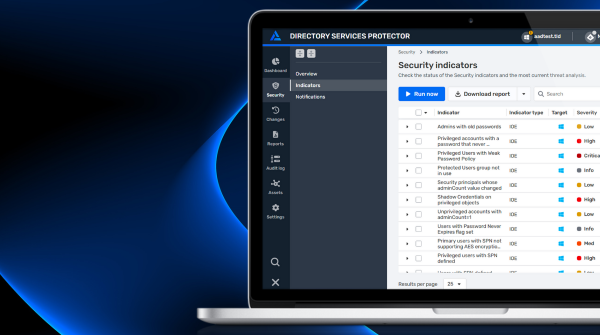
How to Secure Service Accounts: Protecting Identity Security’s Achilles’ Heel
- Ran Harel
Securing service accounts is essential for identity system security, but in practice, it’s prohibitively time- and resource-intensive. Learn why service accounts are a stubborn security gap—and how to close it.

Improve Hybrid AD Security with Automated Response and Streamlined Administration
- Eran Gewurtz | Director of Product Management
Service accounts are easy to misconfigure, hard to keep track of, and often forgotten, making them ideal entry points for cyber attackers. Learn how DSP expands your ability to discover, monitor, govern, and protect service accounts.

Golden dMSA: What Is dMSA Authentication Bypass?
- Adi Malyanker | Security Researcher
Delegated Managed Service Accounts are designed to revolutionize service account management. But Semperis researchers have discovered a critical design flaw that attackers can exploit for persistence and privilege escalation in AD environments with dMSAs. Learn about Golden dMSA and its risks.

How to Block BadSuccessor: The Good, Bad, and Ugly of dMSA Migration
- Jorge de Almeida Pinto
The BadSuccessor privilege escalation technique presents a severe risk to Active Directory environments that use delegated Managed Service Accounts. Learn how blocking dMSA migration prevents attackers from misusing a dMSA to take over an AD domain.

Understanding Identity Security Posture: See the Big Picture of Your Hybrid Environment
- Sean Deuby | Principal Technologist, Americas
Pursuing cybersecurity maturity requires more than flipping a switch. To maintain a strong identity security posture, start by taking a broader look at the complex factors affecting your identity ecosystem.

How to Defend Against Password Guessing Attacks
- Daniel Petri | Senior Training Manager
Here’s what you need to know about password guessing and how to protect Active Directory—and your organization.

BadSuccessor: How to Detect and Mitigate dMSA Privilege Escalation
- Semperis Team
The BadSuccessor Active Directory attack technique exploits a dangerous Windows Server 2025 vulnerability. Learn how DSP indicators of exposure and compromise enable you to proactively halt malicious activity.

What is Identity Attack Surface Management?
- Daniel Petri | Senior Training Manager
A specialized identity attack surface management (IASM) practice is not optional. It’s a fundamental necessity for organizations that rely on identity services like Active Directory.