
English
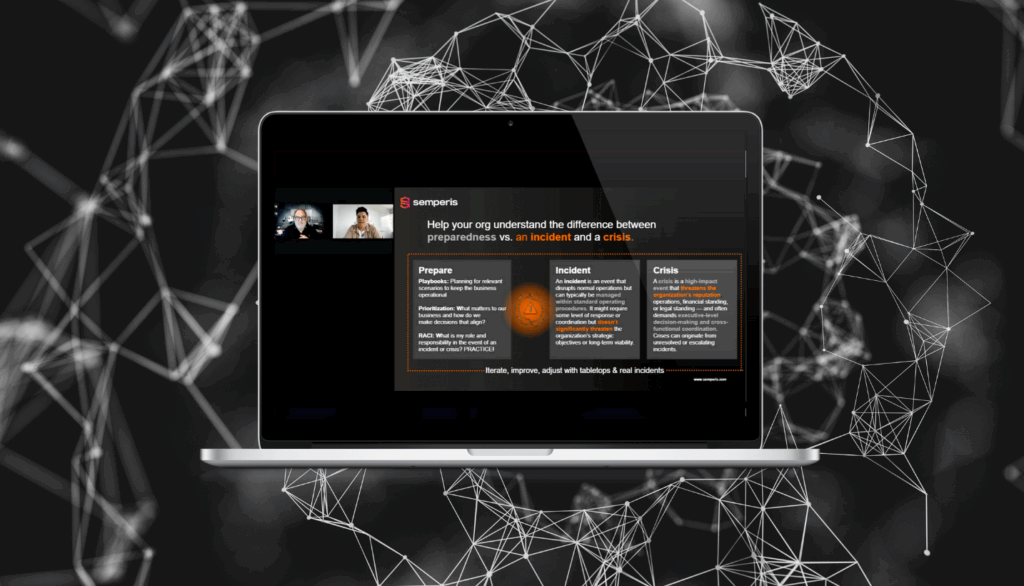
Tech Talk — From Chaos to Control: Rethinking Cyber Crisis Management
- Semperis
- Jun 26, 2025
In today’s digital world, cyber incidents aren’t just IT issues—they’re full-blown business crises. Although many organizations have incident response plans in place, those plans often collapse under the pressure of a real-world event. In this webinar, Courtney Guss (Director of Crisis Management, Semperis) shares why traditional approaches to crisis management…
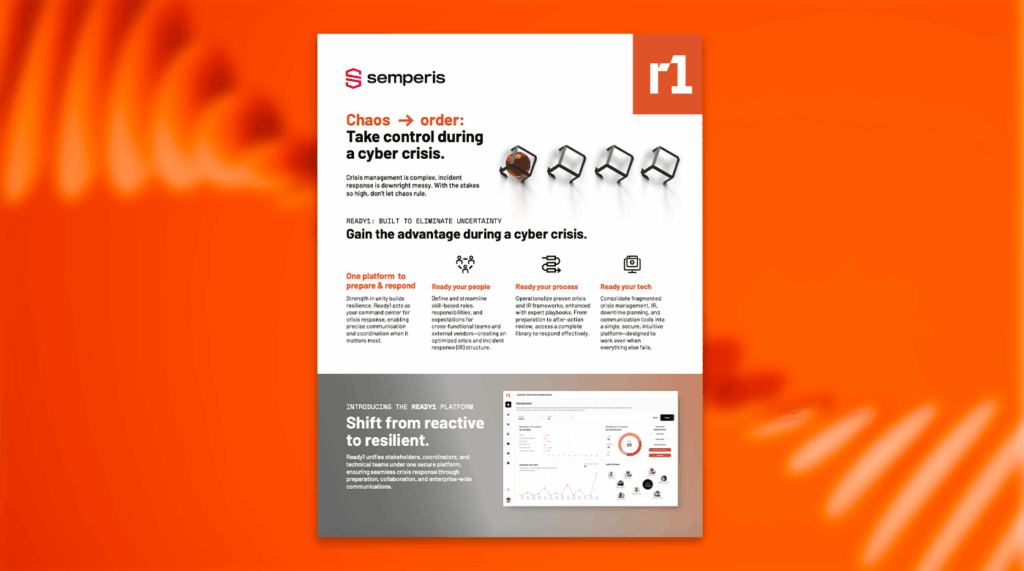
Take Control During a Cyber Crisis with Ready1
INTRODUCING THE READY1 PLATFORM Shift from Reactive to Resilient. Ready1 unifies stakeholders, coordinators, and technical teams under one secure platform, ensuring seamless crisis response through preparation, collaboration, and enterprise-wide communications.
AD Security and Recovery: Questions That Need Answers
- Semperis
- Jun 13, 2025
In today’s threat landscape, attackers prioritize identity and access management systems like Microsoft’s Active Directory (AD) because they hold the keys to the kingdom in most enterprises. In other words: Compromise AD, and you control the organization. That’s why modern cyber resilience strategies must focus on AD security, monitoring, and…
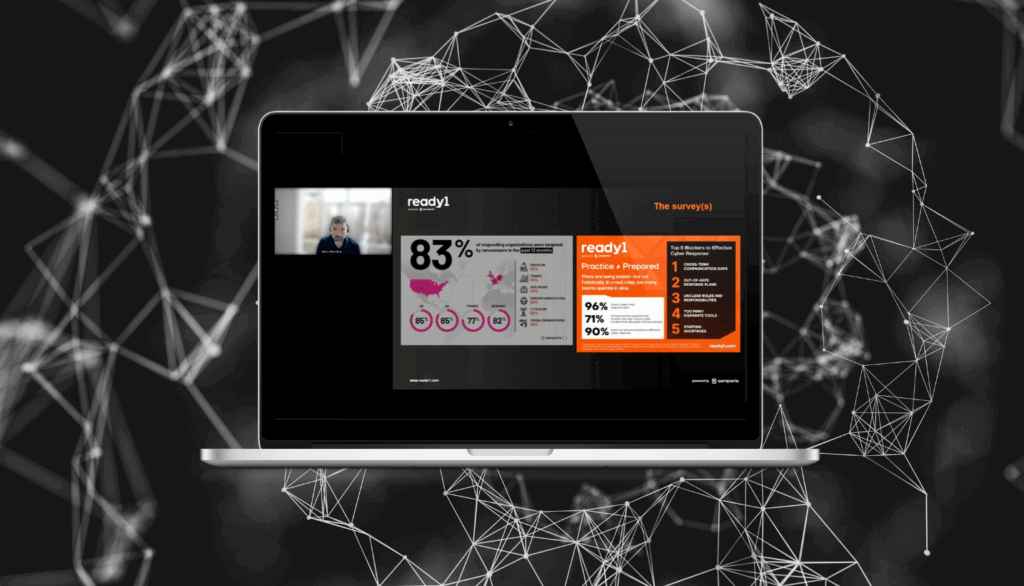
Cyber Resilience By Design
- Semperis
- Jun 13, 2025
Healthcare is a high-value target for threat actors and adversaries. Yet all too often, incident response plans rely on assumptions that can fall apart during a real crisis. In this focused webinar, you’ll learn why healthcare has a “cyber-crisis management crisis” and how organizations can achieve cyber and operational resilience.…
NIS2 and Your Identity Infrastructure
Compliance with the EU’s NIS2 directive requires a focus on securing identity systems, which have become a key battleground for cyber defenders and attackers.
ECC-2 and Your Identity Infrastructure
Saudi Arabia’s ECC-2 controls provide comprehensive, standards-driven cybersecurity practices for public and private organizations. Much of their guidance applies particularly to identity systems—the source of access and authentication across most critical business systems.
Five Eyes Alliance Identity Security Requirements: What Federal Agencies Need to Know
Cybersecurity agencies from the Five Eyes alliance, including the Cybersecurity Infrastructure and Security Agencies (CISA) and the National Security Agency (NSA), have urged organizations to strengthen security controls for Active Directory (AD), a prime target for cyber attackers. In “Detecting and Mitigating Active Directory Compromises,” the agencies highlighted more than…
Sound Advice from Consulting Firm RSM Ebner Stolz: Secure Identity Systems
- May 29, 2025
Learn how RSM Ebner Stolz, one of the top auditing, tax, legal, and management consulting firms in Germany, prioritized ITDR for cyber security and operational resilience.
Why Active Directory’s 25-Year Legacy Is a Security Issue
- Semperis
- May 28, 2025
Active Directory, the central directory service and core of the on-prem identity infrastructure in Microsoft environments, recently turned 25 years old. The service's staying power is undeniable. Unfortunately, so is its status as a primary cyberattack target. Michael Novinson (Information Security Media) met with Semperis' CEO Mickey Bresman to talk…
Maintaining Strong Security Posture at ADP
Recognizing that Active Directory is a prime attack target, the infrastructure team at ADP, global provider of cloud-based human capital management (HCM) solutions, looked for a solution that could help them continuously assess their legacy AD environment for misconfigurations.

Sign Up for the Latest Semperis News

Experience a personalized demo
Request a demo and one of our product experts will give you a spin of our solutions.